
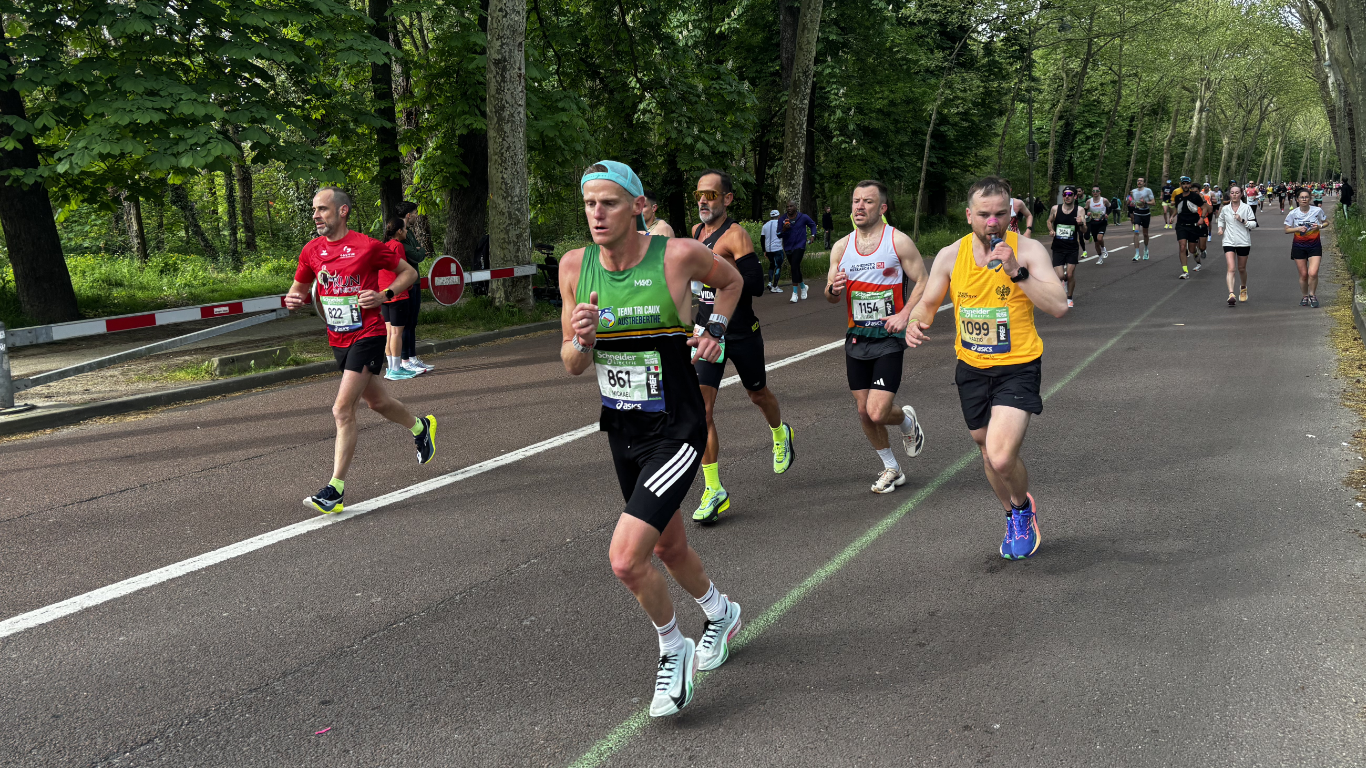
Goal First Marathon: The Complete Guide
Embarking on the preparation for a first marathon is the beginning of a real sporting challenge and also a leap into the unknown. It can be intimidating. The prospect of long months of training, and especially running just over 42 kilometers for the first time, can be daunting. But with a good dose of courage, motivation, and patience, nothing is impossible, especially if the preparation is well-structured and well-executed. So, if your goal is to prepare for your first marathon, here is a comprehensive guide with a list of key tips for a first marathon.
Sign Up and Choose a Flat, Fast Course
The first piece of advice (if you haven't already), is to turn the dream into a concrete project by taking the step of registering for a marathon. This is a psychologically important step. It allows you to project yourself into the preparation phase. And projecting yourself is key to staying motivated day after day, week after week. Ideally, choose a rather accommodating course. For a first marathon, it is not advisable, for example, to add difficulty with elevation gain. It's better to start with a first marathon on a flat and fast course. Remember to identify the marathon(s) that interest you well in advance in the calendar. Some fill up very quickly.
Get Well-Equipped
After motivation, the right equipment is the second key ingredient to start preparing well for your marathon running project. Appropriate equipment essentially includes shoes and running apparel, and potentially a GPS watch to track your training paces and distances. For a first marathon, the keyword for shoes and running apparel is comfort. Endurance running for several hours is a demanding sport with many repetitive impacts. Therefore, you must ensure that your equipment is suitable to make your task easier, not harder, if discomfort sets in, or worse, if an injury appears due to unsuitable equipment (especially if your shoes do not provide enough cushioning or alter your natural stride). Don't hesitate to seek advice and invest in the right equipment.
For long-distance apparel, we offer at EDELI ultra-light, highly breathable, and very comfortable technical clothing.
Visit a General Practitioner or Sports Doctor
Before starting preparation, it is prudent to make an appointment with your general practitioner or a sports doctor. The goal is to ensure that there are no contraindications to competitive sports, in this case, marathon participation. Running for several hours at a sustained pace during a marathon will strongly solicit the cardiovascular system. For neo-marathoners over forty or with a family medical history, an exercise stress test can complement a visit to your general practitioner.
Follow a Detailed Training Plan for at Least 4 Months
A marathon requires long-term preparation. For a first marathon, this means at least 4 to 6 months of preparation. Opt for a 6-month period if you don't have much running experience. You can break it down into two phases: a first three-month phase of acclimatization to running and a second three-month phase of specific marathon preparation. The keywords for a successful training period are variety, progressiveness, and regularity: variety of sessions each week with a mix of complementary sessions, recovery sessions at fundamental endurance pace, interval or hill sessions, threshold sessions, and long runs; progressiveness with a gentle start and a gradual increase in distances, speeds, and duration of long runs (be patient and do not try to rush things); regularity, which requires training week after week 3 to 4 times a week for 4 to 6 months. This combination (variability, progressiveness, and regularity) will eventually pay off, and I promise, you will reap the rewards with a little patience.
Don't Neglect Long Runs
One of the key sessions for successfully completing a marathon is the long run. This is what will accustom your body to running for a long time. These sessions are mostly run at a fundamental pace, with the option of some segments at marathon pace. They are somewhat of a prerequisite for discovering endurance. They are essential for finishing a marathon. They are also valuable laboratories for testing equipment, hydration, and nutrition in real conditions. They allow you to learn patience and test your motivation. They generally last around one and a half to two and a half hours. They provide a first glimpse of what the second half of the marathon will be like, when the legs are no longer as fresh as at the start. They do not allow you to discover what the last ten or five kilometers of a marathon will be like, those that require digging deep, running as much mentally as physically, but they are the keys to learning and building endurance.
Strengthen and Stretch
Beyond the varied training sessions mentioned above and the famous long runs, it is important to plan muscle strengthening and stretching sessions at least twice a week. These will make you gain efficiency and ease in your running. A more toned body and a stronger core allow for better transmission or transformation of your stride into speed, especially when fatigue accumulates (fewer wasted movements or collapsing strides). Greater flexibility means more relaxation and therefore easier, more energy-efficient running. So remember to plan two weekly sessions of muscle strengthening and stretching (work all key areas: ankles, legs, hips, back, abs). They will perfectly complement your running sessions and make them increasingly fluid.
Learn to Fuel and Hydrate During the Race
A marathon lasts between 3 and 5 hours for the majority of participants. This means that nutrition and hydration will play a key role in the success of the race on race day. You need to learn to eat and drink regularly over time while running. Hydration should be regular every 15 to 20 minutes of running, and nutrition every 30 to 45 minutes. The amount of drinks will vary depending on the race conditions and individual body types. Hot and humid weather will lead to increased perspiration and therefore greater hydration needs. Mixing drinks between water and an isotonic drink will ensure the necessary intake of mineral salts.
For nutrition, you need to try different foods and brands, whether for gels, fruit bars, fruits, or other nutritional supplements. Digestion during the race is not easy, as blood flow to the stomach is less during exertion. So you need to make sure that you digest well what you will carry with you during the race. Finally, plan to mix sweet and savory to avoid feeling nauseous.
It is absolutely essential to test all drinks and foods before race day to be sure that your choices are the right ones and that what you bring with you will not cause you digestive difficulties during the race. In the last third or quarter of a marathon, as fatigue accumulates, you don't want to add to the difficulty of having to finish a marathon with feelings of bloating or a sensitive stomach.
Pre-race testing also applies to your equipment. You should avoid running with brand new shoes on race day. You must test your equipment (shoes and outfit) especially on your longest runs, those that are closest to the distance and duration of a marathon.
Participate in a Half Marathon
Nothing beats participating in a half marathon, at least one month before your marathon date, to get used to the atmosphere and conditions of a race. The half marathon distance allows you to experience real race and competition conditions during an endurance race (a half marathon will last between one and a half and three hours for most runners). This will give you a good idea of what will happen on marathon day during the first 20-25 kilometers. This may encourage you to start cautiously on marathon day. Do not try to achieve your best time over the distance during this training half marathon. The idea is rather to approach this race as a long run in competition conditions, potentially at your marathon pace, at least for the first fifteen kilometers. If you feel really good during your half marathon, you can accelerate slightly over the last 5 kilometers.
Recover and Listen to Your Body
Training for a first marathon lasts between 4 and 6 months. This duration is necessary for the body to adapt to the regular and intensive practice of running. The danger is sometimes to get so "caught up in the game" that rest days and recovery weeks are not sufficiently respected. The risk associated with "uncontrolled" enthusiasm is the onset of an injury that can jeopardize your training plan, or even your participation in the marathon on race day. For a first marathon, it is therefore recommended to plan at least two rest days per week (without any physical activity). If you are really very motivated and can't sit still, plan an additional cycling or swimming session instead of a fifth running session. Also respect the recovery weeks in your training program and the tapering period at the very end of the program. Take care of your sleep and listen to your body. If fatigue accumulates, ease off the pressure and recover before starting a more intense week.
Prepare Mentally
There is no easy marathon. All marathons demand a level and duration of effort that are out of the ordinary. And inevitably, especially in the second part of a marathon, your body will send you signals that resemble a form of suffering. Your body will tell you to stop, slow down, lie down in the grass, and not have to continue running. Unless you are in a situation of great physical difficulty or the onset of an injury that indeed requires stopping, it is your mental strength that will have to take over. A few small tricks to help yourself mentally when the race becomes tough: count backward after 25 or 30 kilometers, "I only have 12 kilometers left to run"; focus only on the next section of the race until the next aid station, and consider it a small reward; enjoy the encouragement of spectators and your supporters, especially in the last 10 kilometers.
Know Your Paces and Stay Realistic
As Plato might have said if he had run a Marathon, the most important thing is to know yourself. Know your target paces well: your fundamental endurance pace, your threshold pace, and of course, your marathon pace. Knowing your target marathon pace precisely while remaining realistic about your physical abilities is a big step towards a successful marathon. The marathon is a fast long-distance race, meaning you will run for a very long time at the maximum speed you can maintain for several hours. This is what makes this race both legendary and terribly demanding. It is long (42 kilometers, several hours) and it is run fast. It is not possible to go into it unprepared without knowing your target marathon pace. Running a marathon means managing your energy reserves as precisely as possible to last the distance and not squander them too quickly.
Master the Taper
The tapering period, the final phase of training, covers the two or three weeks before the marathon. These are weeks where you need to find the right balance between fitness and freshness. The goal is to benefit from the cumulative effect of weeks and weeks of training while arriving sufficiently fresh on race day. The last few weeks of training include generally shorter sessions with speed exercises to maintain the target pace. Above all, prioritize sleep and hydration in the last few days before the marathon to arrive in top form and perfectly hydrated at the start of the race.
BManage the Eve and Morning of the Race Well
On the eve of a first marathon, stress and excitement can be present. This is completely normal—it's a sign that the event matters to you. But this last day before the race deserves careful management, as it can have a real impact on your performance the next day.
Logistically, prepare all your equipment the night before so you don't have to look for anything on race morning: bib pinned to your outfit, shoes, charged GPS watch, nutrition and drinks ready in your bag. Also anticipate your wake-up time, taking into account travel time to the start and the time you need to be in your corrals—large marathons close the corrals well before the official start.
Regarding food, opt for a dinner that is familiar, tested, and easy to digest – pasta, rice, carbohydrate-rich foods but without excess and without surprises. This is not the evening to try a new restaurant or an unusual dish.
Mentally, try not to dwell on your preparation or project yourself too far into the race. You have done the necessary work. Trust your weeks of training. Watch a movie, read, de-stress. And go to bed early – even if falling asleep is difficult due to stress, simply resting and lying down will be beneficial.
On race morning, wake up early enough to have a light and familiar breakfast two to three hours before the start, hydrate calmly, and arrive at the venue without rushing. Starting a marathon feeling serene and well warmed up is already a small victory before even running the first kilometer.
Start slowly on race day
The most frequent mistake on race day for marathon runners, and perhaps even more so for first-time marathoners, is starting too fast. You’ve been training for months and the desire to compete is strong. You feel ready, and all other participants share this enthusiasm, this motivation. The wait in the starting corral seems endless, and when you can finally start running, you unleash your speed. The danger, of course, is to mismanage your energy reserves and expend too much in the first half of the marathon, the part you know best and where you have your bearings from having already run the equivalent of or a little more than a half-marathon. But a marathon truly begins after about 25 kilometers. And all the energy you’ve saved in the first kilometers will be more than welcome in the final kilometers.
Know how to enjoy and relax
The last and perhaps most important piece of advice is to know how to enjoy this unique experience, this sporting feat that is the 42 kilometers of a marathon. Try to run as relaxed as possible. This will help you conserve energy. Absorb the energy of the crowd, engrave every kilometer of this adventure in your memory – because crossing the finish line of your first marathon is a moment you will only experience once and will remember for the rest of your life.
So relax your shoulders, breathe, and savor it: you are doing something extraordinary.



Leave a comment
This site is protected by hCaptcha and the hCaptcha Privacy Policy and Terms of Service apply.