
Summer Trail Running: Essential Gear for Mountain Adventures
Summer is the peak season for trail runners, especially in the mountains. Days are long, landscapes are magnificent, and conditions often allow for exploring more technical or higher-altitude trails that are harder to access the rest of the year. However, running potentially in high heat and in the wilderness also requires appropriate preparation. Poorly chosen attire, lack of water, or insufficient sun protection can quickly turn an outing into a minor or major ordeal. To fully enjoy your summer mountain trail runs, here are four essential tips for setting off with the right gear.
1. Choose light and breathable clothing
The first rule is to prioritize technical clothing capable of effectively wicking away perspiration. Lightweight synthetic materials offer an excellent balance of breathability, comfort, and quick drying. For the bottom, trail shorts or cycling shorts help limit chafing while providing good freedom of movement. Opt for models with numerous integrated pockets. They are very practical for carrying energy bars, gels, keys, phone, or a light windbreaker without having to take out your pack to grab them. EDELI's 6-pocket trail shorts were developed with this in mind, featuring a tunnel pocket at the back, two side pockets on the thighs, and three pockets integrated into the waistband.
Finally, choose trail shoes suited to the terrain you'll be covering, with soles that are both durable (against sharp stones) and provide sufficient grip.
2. Bring essential accessories: trail pack and poles
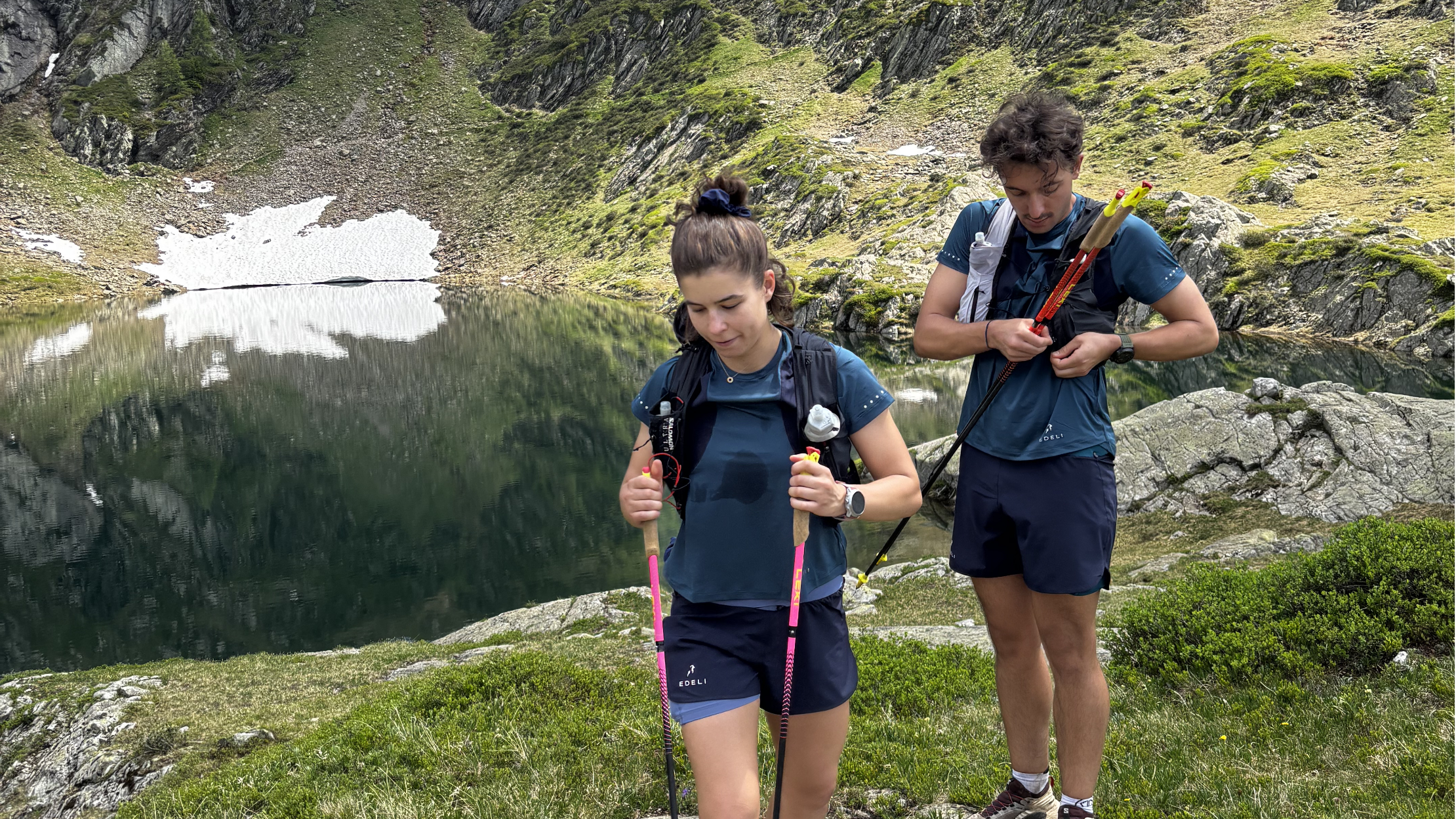
Even on a relatively short outing, a minimum of gear is essential. A trail pack quickly becomes an indispensable ally once the duration of the outing exceeds an hour. With trail shorts or cycling shorts with multiple pockets, you can potentially do without it for outings under an hour.
The trail pack allows you to carry your water, some provisions, an extra layer, or even an emergency blanket depending on the terrain. The goal is to remain self-sufficient while maintaining excellent running comfort. Choose a well-fitting model so it doesn't bounce around while you run.
Trail poles, stored in a quiver attached to the trail pack, can also be very useful, especially on mountainous courses with significant elevation gain. They help relieve leg strain on ascents and reduce muscle fatigue over long distances. They are not essential on flat or less technical trails. Their use primarily depends on the terrain profile and your running habits.
3. Protect yourself well from the sun
In summer, the sun is often the trail runner's most formidable adversary. Good protection helps limit the risks of sunstroke, heatstroke, or burns.
A cap is an almost indispensable piece of equipment. It protects the face, improves visual comfort, and limits direct exposure to the sun's rays. Some very light models also promote ventilation thanks to micro-perforated fabrics.
Sunglasses are just as important. They protect the eyes from UV rays, but also from branches, insects, or dust thrown up on the trails. Choose lenses adapted to the light conditions and offering good facial coverage.
Finally, sunscreen should not be forgotten. Apply high-SPF protection before you start on exposed areas: face, ears and neck (don't forget these), arms and legs if necessary. For long outings, remember to bring a small tube to reapply after a few hours of effort.
When possible, prefer an early morning or late afternoon start to avoid the hottest hours.
4. Adapt your hydration to the route and conditions
Hydration is undoubtedly the most important element during a summer mountain trail run. Unlike road running where water points are often plentiful, trails sometimes offer few resupply opportunities.
Before each outing, take the time to analyze your route. How long will you be running? What will the elevation gain be? Are particularly high temperatures forecast? Are there water points where you can refill your water?
All this information helps determine the amount of water to carry.
For an outing of about an hour, a reserve of 500 to 750 ml may be sufficient depending on the heat. Beyond two hours, it often becomes necessary to carry between 1 and 2 liters of water, or even more on very hot days or particularly demanding courses.
Soft flasks are very popular today because they limit water movement during the run and take up less space once emptied. A hydration bladder also remains an excellent solution for long outings.
In case of high heat, it is advisable to add a drink containing electrolytes to compensate for losses due to perspiration and limit the risk of dehydration.
Do not rely on natural water sources whose presence or quality you are not certain of. Preparing sufficient hydration before you start remains the best strategy. Also remember to bring energy bars or gels.
Summer trail running is a real pleasure, provided you are well-equipped. Breathable clothing, a pack adapted to the route, sun protection accessories, and a well-thought-out hydration strategy allow you to run more comfortably, but above all, safely.
Before each outing, take a few minutes to ensure your equipment is suitable for the terrain, weather, and expected duration.
Last safety tips: if you are going out alone, notify someone you know and share the estimated duration of your outing and where you are going. Also, bring your phone sufficiently charged.
This preparation often makes all the difference between a successful outing and a more complicated experience. In trail running, especially in the mountains, anticipating remains the best way to fully enjoy every kilometer.



Leave a comment
This site is protected by hCaptcha and the hCaptcha Privacy Policy and Terms of Service apply.